guest |
November 20th, 2012
Today is Universal Children’s Day, a day to remind people across the globe of the rights and welfare of children.

Children's Day highlights the importance of welfare.
The day was first established in 1954 by the General Assembly of the UN as a response to child labour. The day highlights the inhumane aspects of child labour: the long hours, dangerous work conditions, and denial of education.
In most countries, the situation of child labourers has improved drastically since 1954, but there are still over 215 million child labourers around the world today. The UN is worried about the current trends because it seems that the number of child labourers is on the rise in poorer countries. The UN has therefore declared to eliminate child labour by 2020. This declaration fits into the Millennium Development Goals (MDGs), which all have a target date in 2015. Although the MDGs are for all human kind, they are primarily about children.
“We were all children once,” is the message from the secretary general on Universal Children’s Day. “We all share the desire for the well-being of our children, which has always been and will continue to be the most universally cherished aspiration of humankind.”
Happy Universal Children’s Day everyone!
Read more:
World Day Against Child Labour – June 12th
11th Hour, of the 11th Day , of the 11th Month.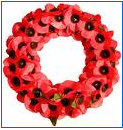
Armistice & Veterans Day is commemorated, especially in Europe and North America, in rememberance of the ending of the First World War. 11am on November 11th was the date chosen to end formal hostilities. The day is now used to remember all those who have lost their lives during war times. Although not a public holiday in Europe, a one-minute silence is observed at 11am. The nearest Sunday to the 11th traditionally is Remembrance Sunday when town officials place wreaths of poppies on their town’s memorials.
In Poland, 11th November is a national holiday and, besides Remembrance Day, it celebrates Polish Independence Day. In the USA, if Veterans’ Day happens to fall on a Sunday, then the following Monday is declared a public holiday. This is considered to be one of the most important holidays in America. Comemorated in Italy on 4th November.
Read more.. »
 Halloween Day is celebrated as a festival around the world.
Especially celebrated by the younger generation, this festival of All Hallowes comes about as a practice followed among the Christian population and has its origins as a Pagan Celtic festival – Samhain. It’s celebrated the night before the Christian Festival of All Saints Day. Adults create laterns for their children made from large pumkins which have been made into ghoulish faces. Children play ‘trick or treat’.
However, in the Nordic countries this is the evening when friends and relatives who have died are remembered. People often go to the cemetary and place lit candles in the snow. The sight of hundreds of candles burning in the dark, illuminated by the white snow is quite a sight.
Find out more about Halloween
Find out more about All Saints Day
To honour the spirit of the Olympics 2012, 204 poems from around the world, from Afghanistan to Zimbabwe, have been collected from each of the 204 participating countries by the Scottish Poetry Library. 
Here are the first nine from Australia and Oceania. Enjoy!
- Australia: The Mitchells
- Cook Islands: Turakina Street
- Fiji: Tern
- Kirbati: Bonefish
- Micronesia: I follow her
- Nauru: Rains of Nauru
- New Zealand: Nowhere
- Papua New Guinea: Tuna
- Samoa: Flying-fox
The poems selected are often not by the most notable poet a country has produced. Some of them are funny or light-hearted. Often they are snapshots of lives rather than grand narratives. And some of the choices may be controversial. However, they all give a glimpse of lives in countries spanning the globe. Together these poems depict a world united not only by sport, but by emotions that are universal and need no translator other than the heart.

My good friends from 'down-under' - Holona & Trish Lui
New Zealand’s nationhood is both proudly acknowledged and embraced on Waitangi Day: the 6thof February. It marks the signing of the Treaty of Waitangi in 1840 between the local Maori (NZ indigenous people) and the British Crown. Over the years the Treaty has been hailed and celebrated as a symbol of New Zealand’s nationhood; but, on the other hand, the Treaty is also condemned by those who seek to ignore and dismiss its provisions and obligations on the Crown to safeguard Maori rights to their language, culture, land and resources. This has meant that Waitangi Day is both a celebration of nationhood, and at times a flash point between the differing cultural values of Maori…
Waitangi Day is New Zealand’s national day with celebrations 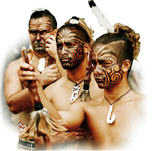
taking place all over the country. Every year on 6 February, New Zealand marks the signing of the Treaty of Waitangi in 1840. In that year, representatives of the British Crown and over 500 Maori chiefs signed what is New Zealand’s founding document. The day was first officially commemorated in 1934, and it has been a public holiday since 1974. Click the links to see photos of Maori dancers: for more information on Waitangi Day: and information on Maori Culture.
One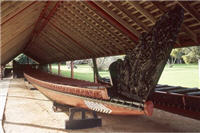 of the world’s largest Māori ceremonial waka (war canoe), the Ngatokimatawhaorua, can be found at Waitangi. The enormous wooden vessel, with room for 80 paddlers and 55 passengers, is an impressive sight on the water. The 70-year-old waka has been refurbished and relaunched for the 2010 celebrations. See photos of the canoe in action
International Women’s Day is a global day to celebrate the economic, political and social achievements of women past, present and future. The first IWD was launched by a woman named Clara Zetkin (German) in 1911. In some places like China, Russia, Vietnam and Bulgaria, IWD is a national holiday. However, the plight of women and the hardship they still face in many countries is highlighted by many organisations – see below.
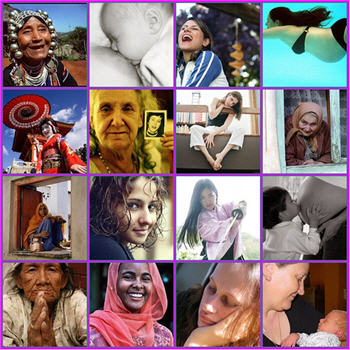
Global issues facing women include:
Females in developing countries on average carry 20 litres of water per day over 6 km
Globally, women account for the majority of people aged over 60 and over 80
Pregnant women in Africa are 180 times more likely to die than in Western Europe
530,000 women die in pregnancy or childbirth each year
Of 1.2 billion people living in poverty worldwide, 70% are women
80% of the world’s 27 million refugees are women
Women own around only 1% of the world’s land
AIDS sees women’s average life expectancy reduced to 43 in Uganda and Zambia
Women are 2/3 of the 1 billion+ illiterate adults who have no access to basic education
Read Fakhria Ibrahimi’s account of the plight of women in Afghanisaton
Official International Women’s Day site – see how you can help bring about change in the world.
Photograph by web/graphic designer Melanie Cook, used with permission. Thank you!
Australia and New Zealand follow western business practices, 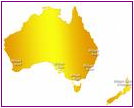
place heavy emphasis on individuality and adhere to the ‘norms’ of British business. People speak of Australia as being very ‘out going’ and relaxed, whilst New Zealand is seen as being rather like Britain was twenty years ago. Few Aussies/New Zealanders people speak any other language than English though there is a large East Asian immigrant community in Australia.In terms of language, aA very distinct accent and slang has developed ‘down under’ which can be difficult for non-native speakers of English, used to American T.V., to understand. Best times to visit on business are February to May or October to November.
In this section you’ll find the Top Ten Tips for doing business, along with opening times, holiday dates and festivities for Australia and New Zealand
Read more.. »


 Hello, I'm Deborah Swallow and, for the last fifteen years, I've worked in over thirty countries addressing the complexities of people working internationally across multiple cultures, so individuals and organisations alike can gain an authentic competitive edge and win in international markets.