“Everyone’s Irish on March 17th!” says a large sign at

A Shamrock has become the symbol of St. Patrick's Day
Dublin’s Guinness museum.
March 17th is, of course, St. Patrick’s Day, a day to honor the death of one of the world’s most popular saints.
St. Patrick was born in Roman Britain, and he has been accredited for bringing Christianity to Ireland. Not much is known of St. Patrick’s life but one of the most famous legends says that he used the Shamrock, a three-leaved plant, to teach the Holy Trinity to the pre-Christian Irish people.
Although the religious origins of the day are widely known, nowadays St. Patrick’s Day is also celebrated as a kind of Irish national day…
Read more.. »
guest |
November 20th, 2012
Today is Universal Children’s Day, a day to remind people across the globe of the rights and welfare of children.

Children's Day highlights the importance of welfare.
The day was first established in 1954 by the General Assembly of the UN as a response to child labour. The day highlights the inhumane aspects of child labour: the long hours, dangerous work conditions, and denial of education.
In most countries, the situation of child labourers has improved drastically since 1954, but there are still over 215 million child labourers around the world today. The UN is worried about the current trends because it seems that the number of child labourers is on the rise in poorer countries. The UN has therefore declared to eliminate child labour by 2020. This declaration fits into the Millennium Development Goals (MDGs), which all have a target date in 2015. Although the MDGs are for all human kind, they are primarily about children.
“We were all children once,” is the message from the secretary general on Universal Children’s Day. “We all share the desire for the well-being of our children, which has always been and will continue to be the most universally cherished aspiration of humankind.”
Happy Universal Children’s Day everyone!
Read more:
World Day Against Child Labour – June 12th
11th Hour, of the 11th Day , of the 11th Month.
Armistice & Veterans Day is commemorated, especially in Europe and North America, in rememberance of the ending of the First World War. 11am on November 11th was the date chosen to end formal hostilities. The day is now used to remember all those who have lost their lives during war times. Although not a public holiday in Europe, a one-minute silence is observed at 11am. The nearest Sunday to the 11th traditionally is Remembrance Sunday when town officials place wreaths of poppies on their town’s memorials.
In Poland, 11th November is a national holiday and, besides Remembrance Day, it celebrates Polish Independence Day. In the USA, if Veterans’ Day happens to fall on a Sunday, then the following Monday is declared a public holiday. This is considered to be one of the most important holidays in America. Comemorated in Italy on 4th November.
Read more.. »
 Halloween Day is celebrated as a festival around the world.
Especially celebrated by the younger generation, this festival of All Hallowes comes about as a practice followed among the Christian population and has its origins as a Pagan Celtic festival – Samhain. It’s celebrated the night before the Christian Festival of All Saints Day. Adults create laterns for their children made from large pumkins which have been made into ghoulish faces. Children play ‘trick or treat’.
However, in the Nordic countries this is the evening when friends and relatives who have died are remembered. People often go to the cemetary and place lit candles in the snow. The sight of hundreds of candles burning in the dark, illuminated by the white snow is quite a sight.
Find out more about Halloween
Find out more about All Saints Day
guest |
October 1st, 2012
In 2008, for the first time in history, more than half of the world’s population was living in cities.
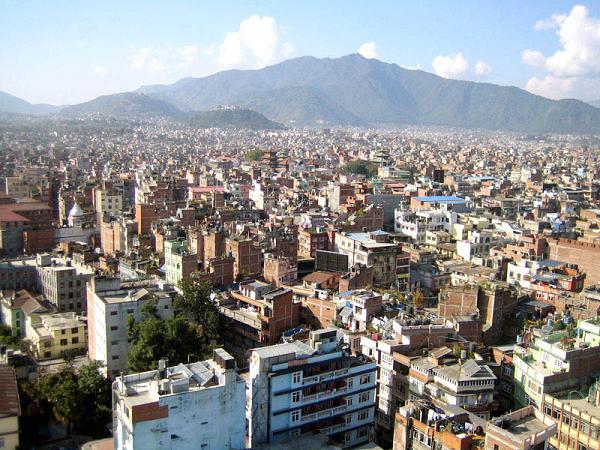
Today more than 50% of the world's inhabitants live in cities.
Today is World Habitat Day, and this year’s theme is Changing Cities, Building Opportunities.
World Habitat Day was first observed in 1986. The purpose of this day is to highlight the role of shelter as a basic human right, and reflect on the state of our cities and towns around the world. This year’s urban theme was chosen because cities are engines of growth, and across the globe more and more people are moving into cities in the hope of a better future. According to research done by the Massachusetts Institute of Technology cities make up only 2% of the world’s surface, but they house more than 50% of the world’s population, consume 70% of the world’s energy, and are responsible for the 80% of the world’s carbon footprint. Research from Yale predicts that by 2030 10% of the world’s surface could be urban, most of this expansion happening in Asia…
Read more.. »
guest |
September 27th, 2012
This year’s theme for 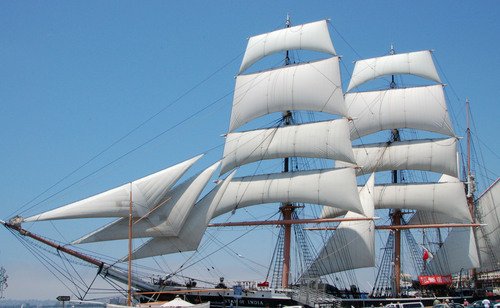 World Maritime Day is One Hundred Years After the Titanic. In 1912, when the Titanic sank, more than 1500 people lost their lives. Two year’s later, in 1914, the first International Convention for the Safety of Life at Sea was adopted.
This year’s theme will provide an opportunity to take stock of the developments in maritime safety since that disaster and to examine which areas of ship safety should be given priority in the years to come.
UN Secretary General Ban Ki Moon says, “A century after the Titanic was lost in the icy waters of the North Atlantic, the IMO is striving to ensure continual improvement in safety at sea. Its work is as important now as ever.”
Read more.. »
How remarkable and diverse is language!

Language is an important part of our identities.
To give us the opportunity to celebrate this the United Nations has designed the 26th of September to be a day to commemorate the learning of languages across the world. There are over 6000 languages spoken globally, underlying rich and beautiful cultures! This day therefore celebrates the joy of learning a new language, and hence finding out about the culture behind it. Language is the gateway to cultures. Johann Wolfgang von Goethe is famously quoted for saying, “those who know nothing of foreign languages know nothing of their own.”
Read more.. »
guest |
September 12th, 2012
Global Competitiveness Report is an annual report published by the World Economic Forum that assesses the competitiveness landscape of 144 major and emerging world economies.
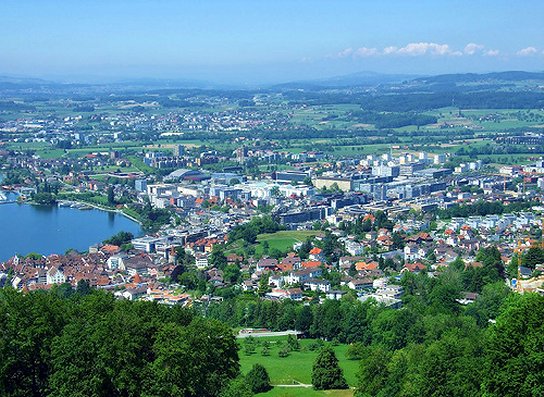
Switzerland tops the overall ranking fourth year in a row.
The report was first published in 1979. Today it is the most comprehensive method of assessing national competitiveness worldwide.
Xavier Sala-i-Martin, Professor of Economics, Columbia University, says that the Global Competitiveness Report provides a window for long-term trends, and allows countries to see the key areas where they must act if they want to better the productivity that will “determine their economic future.”
The report measures a set of institutions, policies, and factors that set the current and medium-term levels of economic prosperity in each country. The World Economic Forum brings these measures together and analyses each country’s ability to provide levels of prosperity to its citizens. Levels of prosperity also depend on how effectively a country uses its available resources.
Read more.. »
When I first arrived in London, in 2009, the BT tower was counting days to the Olympics. The countdown was slowly moving down from the 900s. Now, the moment is only a day away! The Olympic Games 2012 open tomorrow.
Over the past few months London has had mixed feelings about the games. Some Londoners deeply resent them and have long ago made plans to escape the city, others grumble about the traffic the games will bring but are secretly excited, and the rest have been counting days with the BT tower and are warmly welcoming the event.
To get an idea of the enormity of the games, watch the BBC animation on Olympics people in numbers, or the more general Guardian animation on Olympics in numbers. You’ll learn that this is the third time London is hosting the Olympics, and 203 countries are participating this year. The global audience to watch the opening ceremony tomorrow evening is estimated to be around 4 billion people. That’s 60% of the world’s population.
Read more.. »
Today is World Environment Day (WED), one of the principle ways in which the UN stimulates worldwide awareness of the environment and enhances political attention and action.
This year’s theme is Green Economy: Does it include You? Basically, what the UN means by Green Economy are the overall efforts of nations to reduce carbon emission and pollution, to enhance energy and resource efficiency, and to prevent the loss of biodiversity.  According to the UN Environment Program, Green Economy both significantly lowers environmental risks and improves human well-being and social equity. This years theme, therefore, aims to encourage people to find out more about Green Technology and about the various different ways in which they are already included, and the ways in which they can participate further. The official WED website is pledging people to “help break the record for the greatest number of activities registered in WED’s four decade history.”
Read more.. »


 Hello, I'm Deborah Swallow and, for the last fifteen years, I've worked in over thirty countries addressing the complexities of people working internationally across multiple cultures, so individuals and organisations alike can gain an authentic competitive edge and win in international markets.