guest |
November 20th, 2012
Today is Universal Children’s Day, a day to remind people across the globe of the rights and welfare of children.

Children's Day highlights the importance of welfare.
The day was first established in 1954 by the General Assembly of the UN as a response to child labour. The day highlights the inhumane aspects of child labour: the long hours, dangerous work conditions, and denial of education.
In most countries, the situation of child labourers has improved drastically since 1954, but there are still over 215 million child labourers around the world today. The UN is worried about the current trends because it seems that the number of child labourers is on the rise in poorer countries. The UN has therefore declared to eliminate child labour by 2020. This declaration fits into the Millennium Development Goals (MDGs), which all have a target date in 2015. Although the MDGs are for all human kind, they are primarily about children.
“We were all children once,” is the message from the secretary general on Universal Children’s Day. “We all share the desire for the well-being of our children, which has always been and will continue to be the most universally cherished aspiration of humankind.”
Happy Universal Children’s Day everyone!
Read more:
World Day Against Child Labour – June 12th
guest |
October 15th, 2012
It is estimated that 60% of chronically hungry people are women and girls. Today is International Day of Rural Women, a day that recognizes the vital role of rural women, including indigenous women, in enhancing agricultural and rural development, improving food security and eradicating rural poverty.
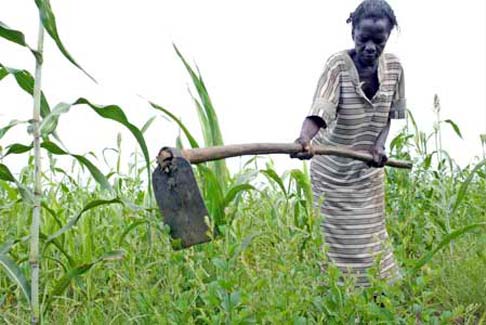
60% of chronically hungry people are women.
The day is purposefully held a day before World Food Day in order to highlight the role rural women play in food production.
The International Day of Rural Women was first observed at a significant time in October 2008. 2006, 2007, and 2008 were the years of the global food crisis when prices of staple foods rose dramatically around the world. Although prices declined slightly right afterwards they spiked again in 2010 and have been high since. UN Women Watch writes that food prices are “likely to remain high and volatile over the next decade.”
Poor rural households feel the global crises the hardest. The poorer the household the more its members have to change the way they live to cope with the crises.
Read more.. »
guest |
October 1st, 2012
In 2008, for the first time in history, more than half of the world’s population was living in cities.
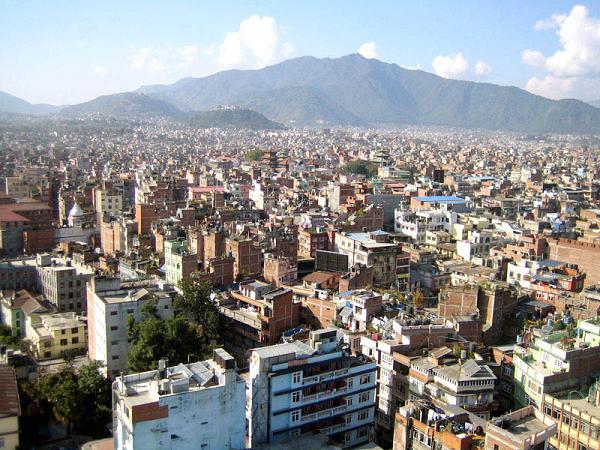
Today more than 50% of the world's inhabitants live in cities.
Today is World Habitat Day, and this year’s theme is Changing Cities, Building Opportunities.
World Habitat Day was first observed in 1986. The purpose of this day is to highlight the role of shelter as a basic human right, and reflect on the state of our cities and towns around the world. This year’s urban theme was chosen because cities are engines of growth, and across the globe more and more people are moving into cities in the hope of a better future. According to research done by the Massachusetts Institute of Technology cities make up only 2% of the world’s surface, but they house more than 50% of the world’s population, consume 70% of the world’s energy, and are responsible for the 80% of the world’s carbon footprint. Research from Yale predicts that by 2030 10% of the world’s surface could be urban, most of this expansion happening in Asia…
Read more.. »
guest |
September 12th, 2012
Global Competitiveness Report is an annual report published by the World Economic Forum that assesses the competitiveness landscape of 144 major and emerging world economies.
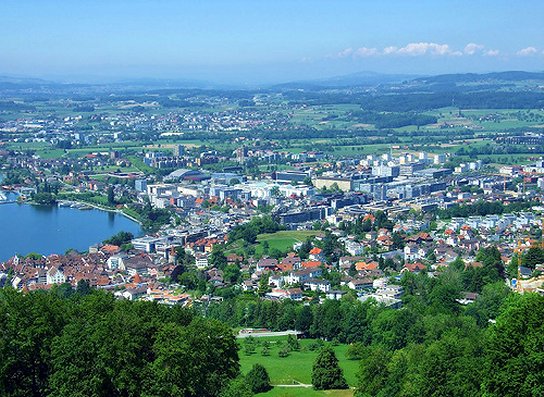
Switzerland tops the overall ranking fourth year in a row.
The report was first published in 1979. Today it is the most comprehensive method of assessing national competitiveness worldwide.
Xavier Sala-i-Martin, Professor of Economics, Columbia University, says that the Global Competitiveness Report provides a window for long-term trends, and allows countries to see the key areas where they must act if they want to better the productivity that will “determine their economic future.”
The report measures a set of institutions, policies, and factors that set the current and medium-term levels of economic prosperity in each country. The World Economic Forum brings these measures together and analyses each country’s ability to provide levels of prosperity to its citizens. Levels of prosperity also depend on how effectively a country uses its available resources.
Read more.. »
To honour the spirit of the Olympics 2012, 204 poems from around the world, from Afghanistan to Zimbabwe, have been collected from each of the 204 participating countries by the Scottish Poetry Library.
Here is the second set of ten from Asia. Enjoy!
- Iraq: My Apologies
- Israel: Returning to Tel Aviv
- Jordan: Dog’s Tail
- Japan: Two Tokyos
- Kazakhstan: Summer
- Kuwait: from My Dreams Often Humble Themselves
- Kyrgyzstan: from Nomad in the sunset
- Lebanon: ‘Our cries, she used to say…’
- Malaysia: Modern Secrets
- Maldives: Realities of Island Life
Follow the link to read the first set of ten Asian poems
The poems selected are often not by the most notable poet a country has produced. Some of them are funny or light-hearted. Often they are snapshots of lives rather than grand narratives. And some of the choices may be controversial. However, they all give a glimpse of lives in countries spanning the globe. Together these poems depict a world united not only by sport, but by emotions that are universal and need no translator other than the heart.
To honour the spirit of the Olympics 204 poems from around
the world, from Afghanistan to Zimbabwe, have been collected from each of the 204 participating countries by the Scottish Poetry Library.
Here are the first ten from Asia. Enjoy
- Afghanistan: The story of my country
- Azerbaijan: The poet’s voice
- Bahrain: All of them
- Bangladesh: Mon-doria
- Bhutan: A lesson in light
- Brunei Darussalam: Brothers, your cries…
- Georgia: Circle and rectangle
- Hong Kong: Floral Apron
- India: Homecoming
- Iran: An Iranian Professor I know asked me…
The poems selected are often not by the most notable poet a country has produced. Some of them are funny or light-hearted. Often they are snapshots of lives rather than grand narratives. And some of the choices may be controversial. However, they all give a glimpse of lives in countries spanning the globe. Together these poems depict a world united not only by sport, but by emotions that are universal and need no translator other than the heart.
The recently proposed “Dymovsky’s Law”, part of Russian
President Dimitry Medvedev’s agenda to halt Russia’s endemic corruption problem, is apparently DESIGNED not to be effective, according to Ed Hancox in The Mantle. Rather than punish corrupt cops, the new law would allow sanctions to be taken against those police officers who make detrimental statements, in public, concerning their superiors – such as accusing them of taking bribes!
Read more.. »
The average size of a bribe in Russia nearly tripled between 
2008 and 2009 and officials there accepted a whopping $33.5 billion in bribes from Russian companies last year, according to a new Russian government report cited in the St. Petersburg Times….
Read more.. »
There is still concern about the notorious ‘‘dark’’ side of 
Russian business affairs, which includes a range of activities that could be regarded as violations of universal codes of human integrity, including extortion and flagrant breach of contract. The Russian phrase ‘nel’zya, no mozhno’ (prohibited, but possible) sums up the attitude of getting around the ‘official system’ where “nothing is legal, but everything is possible”…
Read more.. »



 Hello, I'm Deborah Swallow and, for the last fifteen years, I've worked in over thirty countries addressing the complexities of people working internationally across multiple cultures, so individuals and organisations alike can gain an authentic competitive edge and win in international markets.