Can we imagine our world without the United Nations? 
The 24th October each year celebrates the birth of the UN. The date marks the anniversary of the launch of the United Nations Charter in 1945. United Nations Day is marked throughout the world by meetings, discussions and exhibits on the achievements and goals of the UN.
The purposes of the United Nations, identified in its charter include: maintaining international peace and security, solving international economic, social, cultural and humanitarian problems and promoting respect for human rights. It also campaigns on environmental issues, develops friendly relations between countries and attempts to curb poverty, illiteracy and disease. The UN has 15 different agencies to promote and deliver its goals.
The UN was set up after World War 2 to ‘save succeeding generations from the scourge of war’. The head of the UN is the Secretary General, the current Secretary General is Ban-Ki Moon from the Republic of Korea. There is also a security council to decide issues consisting of five main powers, United Kingdom, USA, France, China and Russia. They are the permanent members of the council, with 10 more countries elected to it to stand for two year terms. Each Council Member has one vote and nine of the 15 members need to be in agreement for action to take place.
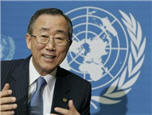 Last year, Secretary General Ban-Ki Moon commented,
‘Sixty-five years ago on this date, the founding Charter of the United Nations entered into force. Every year on UN Day, we reaffirm our global mission. We reassert the universal values of tolerance, mutual respect and human dignity. And we recognize the progress we have made together: gains in literacy and life expectancy… the spread of knowledge and technology… advances in democracy and the rule of law.
But above all, UN Day is a day on which we resolve to do more. More to protect those caught up in armed conflict, to fight climate change and avert nuclear catastrophe; more to expand opportunities for women and girls, and to combat injustice and impunity; more to meet the Millennium Development Goals.’
How do we celebrate UN day?
Tradtionally, UN day is celebrated with an international concert in the General Assembly Hall. Last year, the Korean Symphony Orchestra played with the Westminster Choir College of America and the concert was addressed by the Secretary General.









 Hello, I'm Deborah Swallow and, for the last fifteen years, I've worked in over thirty countries addressing the complexities of people working internationally across multiple cultures, so individuals and organisations alike can gain an authentic competitive edge and win in international markets.