Women around the world are integrating traditions and 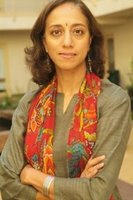 community into
their struggles for change in a way that challenges the very notion of Western models of development. They are showing their strength by subverting the very traditions that once silenced them so that they can give a voice to new aspirations. The three stories about a devout Muslim from Afghanistan, a harmonising group of lesbians from Croatia, and a taboo breaker in Liberia demonstrate that women can use their traditions and culture to navigate change in the face of repression…
Read more.. »
Each year on April 7th, the world recognises World Health Day. 
World Health Day marks the founding of the World Health Organization (WHO) and is an opportunity to raise awareness of key global health issues and marks the importance of health for productive and happy lives. Every year there is a different theme to the day – this year’s focuses on urbanisation and health: with the campaign “1000 cities – 1000 lives”, events will be organized worldwide calling on cities to open up streets for health activities.
Member states of the UN have pledged to meet the Millennium Development Goals by the year 2015 to deuce child mortality, improve maternal health and combat HIV?AIDS, malaria and other diseases.
Easter is the most important festival in the Christian calendar. 
It is the commemoration of Jesus’s death and his rising from the dead, also known as the resurrection. It comes at the end of Lent. The week leading up to it is called Holy Week. Christianity tells us that Jesus was crucified on the cross and died on Good Friday. He was rose from the dead on Sunday, known as Easter Day. But, as the West has become more secular, for some, Easter has become a time to celebrate with chocolate Easter Eggs and little religious ceremony. Bunnies (baby rabbits) are a symbol of Easter. Eggs and bunnies are symbols left over from pagan celbrations of Spring.
Passover (Pesach in Hebrew) is one of the most important 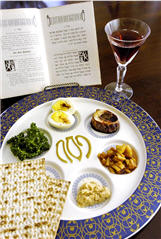
festivals in the Jewish year. It is the occassion when Jewish people remember how they were led away from slavery and out of Egypt towards the Promised Land. Also, the Passover is one of the three national feasts of Israel that were commanded by God that Israel as a nation commemorate annually, and they are; Passover, Shavuot (the feast of weeks also know in the Christian world as Pentecost) and Succot (the feast of tabernacles). A special service called Seder (Order) takes place over a meal around a table in a home.
Read more.. »
Today I’d really like you to spend a few minutes to think about your use – 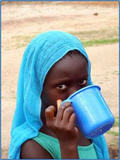
or most probably wastage – of water. Annually, the United Nations designates this day as World Water Day as an opportunity for the world to think about the Environment and our impact upon the natural world. Interestingly for me, last year’s theme was water and culture which drew attention to the fact that “there are as many ways of viewing, using, and celebrating water as there are cultural traditions around the world.” This year’s theme is “Clean Water for a Healthy World” – the overall goal is to raise the profile of water quality at the political level so that water quality considerations are made alongside those of water quantity. It is still a reality that an estimated 1.1 billion people rely on unsafe drinking-water sources.
So, today, instead of drinking your tea or coffee, raise a glass of water and celebrate how lucky we are to be able to drink good, clean and healthy water.

Naw-Rúz (New Day) is the traditional celebration 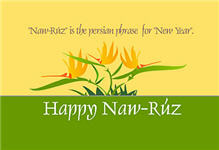
of the Iranian New Year and is celebrated throughout many countries of the Middle East and Central Asia: Iran, Azerbaijan, Afghanistan and Tajikistan. For countries outside of the Middle East, the date has been fixed as 21st March, but traditionally it falls at the spring equinox. Originally it is one of the nine holy days of the Bahá’í Faith and is a work holiday.
Read more.. »
The coming of Spring is celebrated in the Hindu religion over 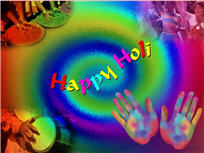
several days during the Festival of Colours – called Holi. Holi is a time for fun rather than religious observance. It is the most vibrant Indian festival, when distinctions of caste, class, age or gender are set to one side. The practical jokes and games that surround Holi are thought to arise from the belief that the origin of the festival lies with Krishna who was very mischievous as a young boy and threw coloured water over the gopis (milkmaids) with whom he is believed to have grown up.
Read more.. »




 Hello, I'm Deborah Swallow and, for the last fifteen years, I've worked in over thirty countries addressing the complexities of people working internationally across multiple cultures, so individuals and organisations alike can gain an authentic competitive edge and win in international markets.
